Loading
projectsIn Progress
Typer
design-engineeringai
- Role
- Product Designer & Engineer
- Timeline
- 2024 – Present
- Technologies
- Next.js 16React 19TypeScriptTiptap 3 (ProseMirror)Vercel AI SDK 7 (Google Gemini)Dexie (IndexedDB)pdf-lib & Print CSSTailwind CSS
Typer is a browser-based typesetting and page-layout editor for graphic designers—built to handle multi-page publications (zines, booklets, portfolios), structured one-pagers, and print-ready PDF output without the steep learning curve or licensing overhead of legacy desktop publishing suites.
Unlike standard rich-text editors that treat a document as an infinite vertical scroll, Typer renders true physical page boxes directly in the DOM and exports via the browser's print engine and pdf-lib—maintaining one render tree and one geometry source so what you compose on screen is pixel-identical to what prints.
System Architecture & Editor Engine
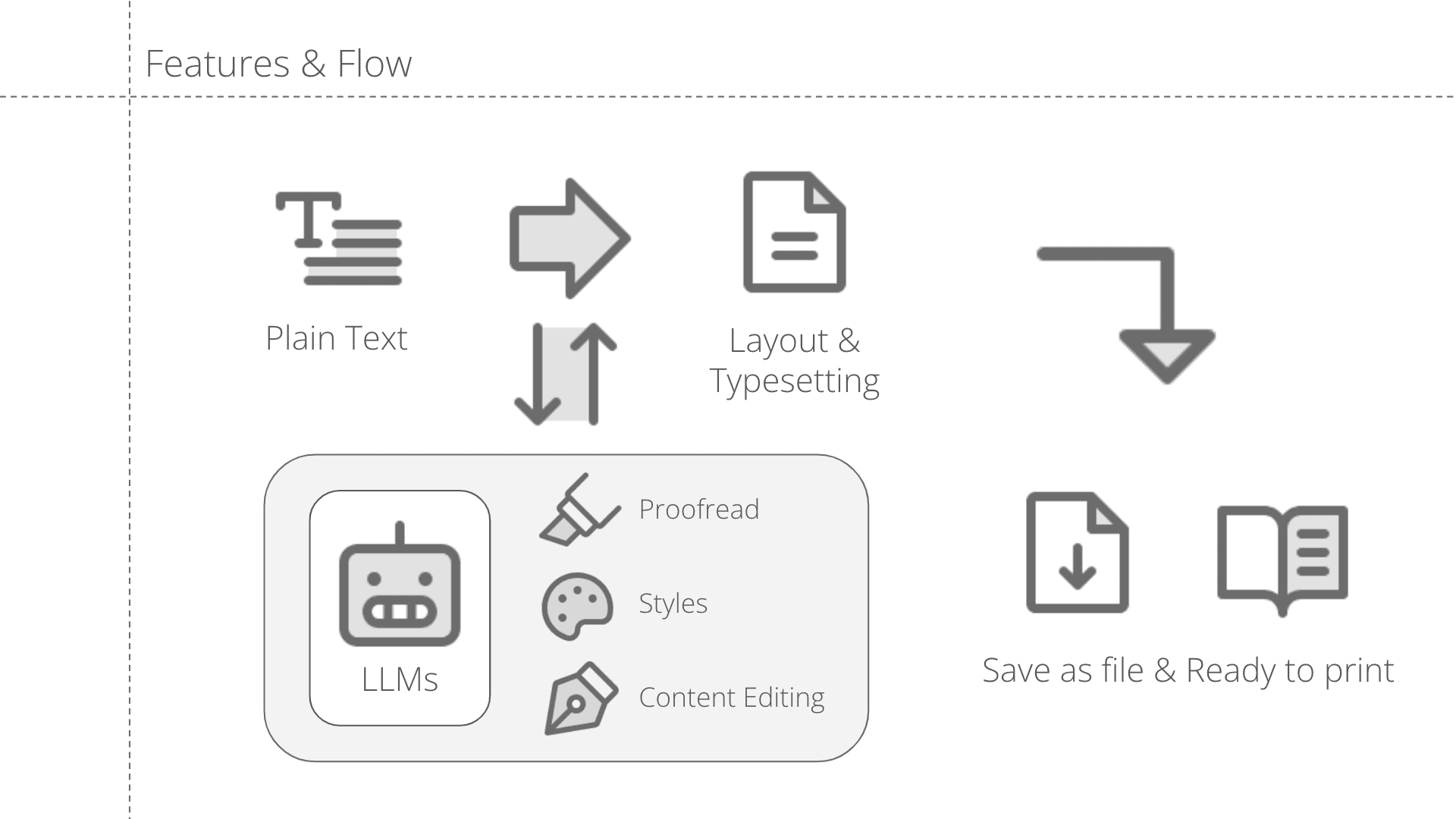
Modernized on Next.js 16, React 19, Tiptap 3 (ProseMirror), Dexie, and Vercel AI SDK 7, the editor combines deterministic print geometry with layout-aware LLM assistance:
- Single-Geometry Page-Box Rendering (
Tiptap 3+ Print Engine): Custom ProseMirror/Tiptap node extensions (@tiptap/react,@tiptap/pm) partition document content into discrete physical trim sizes, margins, running headers/footers, and multi-column grids. Because screen preview and PDF export share the exact same DOM geometry tree, there is zero pagination drift between editing and final print output. - Layout-Aware AI Copyfitting (
Vercel AI SDK 7+Google Gemini): Integrates@ai-sdk/google(Gemini 2.5 Flash) with custom spatial constraints so the AI assistant can rewrite, condense, or hierarchy-normalize copy to fit exact line counts, column depths, and typographic scales without overflowing a page box. - Local-First IndexedDB Persistence (
Dexie+@pdf-lib/fontkit): Documents, custom typographic presets, and embedded OpenType/TrueType font metrics are persisted client-side in IndexedDB via Dexie (dexie-react-hooks), allowing instant offline-capable editing and zero-latency layout recomputation.
User Research & Product Direction
Through in-depth interviews with graphic and editorial designers transitioning from studio coursework to commercial practice, three structural findings shaped Typer's design:
- Non-Linear Revision Overhead: Even single-sheet poster layouts require 5–6 hours of iteration, while multi-chapter booklets span weeks of manual style synchronization—with late-stage copy edits forcing cascading manual reflows across pages.
- Tool Fragmentation: While senior publication designers rely on rigid InDesign scripts, early-career designers frequently chain multiple tools (Figma, Google Docs, Markdown editors, and PDF utilities) to bridge technical gaps, introducing formatting drift between drafts.
- Browser-Native Accessibility: Independent designers strongly favor lightweight, zero-install browser tooling with local document ownership over heavyweight enterprise subscriptions.
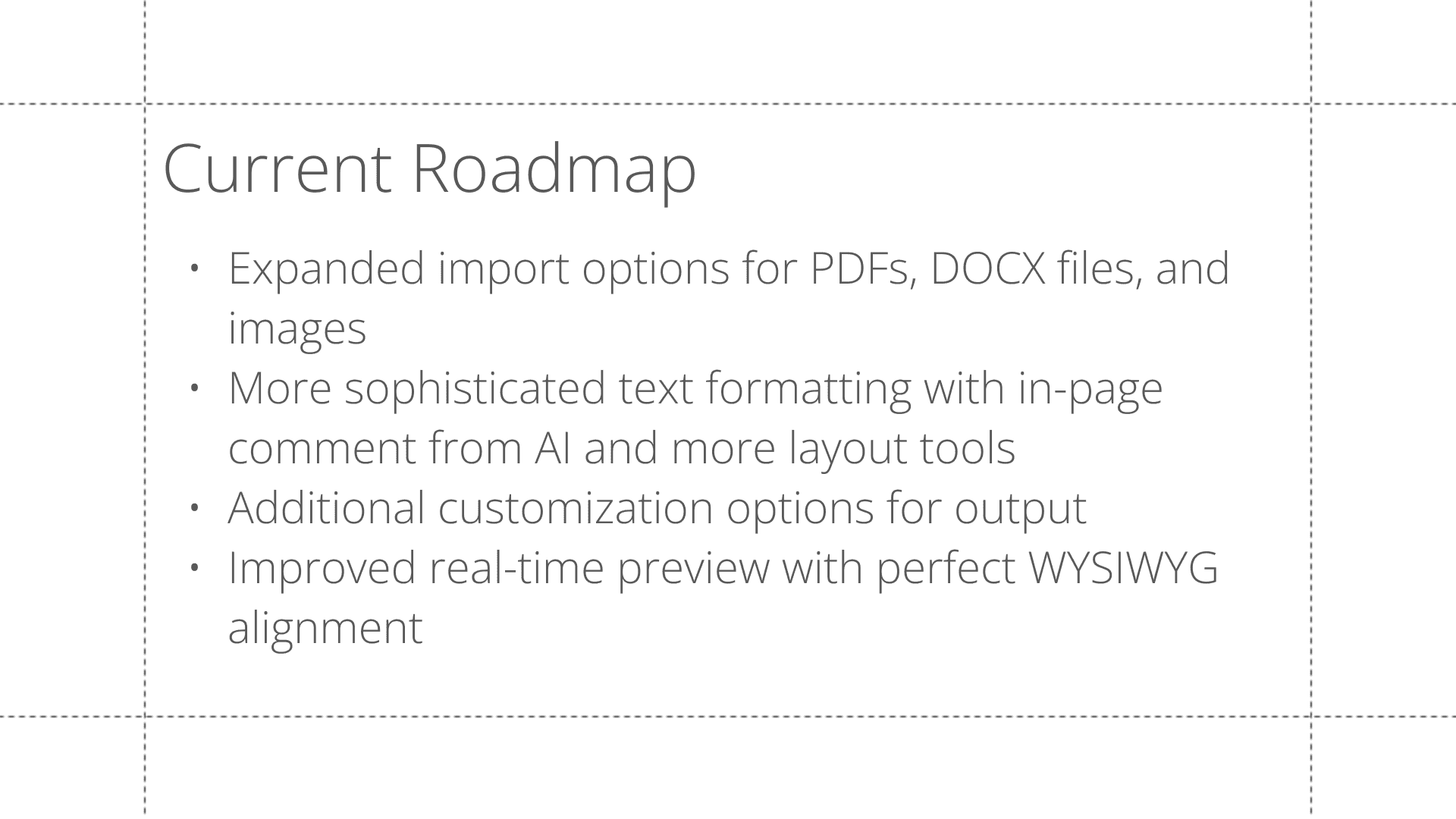
Product Roadmap